
What is PLN?
Phospholamban (PLN) is a small but essential protein that helps regulate calcium movement within heart muscle cells, allowing the heart to contract and relax efficiently with every heartbeat. The PLN R14del mutation is a rare inherited genetic change in the phospholamban gene in which the amino acid arginine (Arg) is missing at position 14. Although this is a small genetic change, it disrupts the heart’s ability to handle calcium properly, placing chronic stress on heart muscle cells.
Over time, this can lead to fibrosis (scar tissue), cardiomyopathy, dangerous heart rhythm disorders (arrhythmias), heart failure, and an increased risk of sudden cardiac arrest. Unlike many other forms of heart disease, life-threatening arrhythmias can sometimes occur before the heart’s pumping function becomes significantly weakened.
First identified in 2006, PLN R14del has since been recognized in families around the world. Although there is currently no cure, advances in genetic research, RNA therapies, gene therapy, and precision medicine are bringing us closer to treatments that target the underlying cause of the disease. Early diagnosis through genetic testing, routine cardiac screening, and ongoing care with an experienced cardiologist can help identify changes early and improve long-term outcomes.
Explore the Facts
Click any statistic or fact to learn more about the research, science, and what it means for people living with PLN!
The scientific name of the most common PLN mutation is PLN p.Arg14del (PLN R14del). This name describes a very specific genetic change in the phospholamban (PLN) gene, where the amino acid arginine (Arg) is missing at position 14 of the PLN protein. Although this may seem like a small change, it has significant effects on how heart muscle cells function.
The PLN protein plays a critical role in regulating calcium movement within heart muscle cells, which is essential for the heart to contract and relax with every heartbeat. When the R14del mutation is present, calcium regulation becomes disrupted, placing chronic stress on the heart muscle. Over time, this can lead to injury of heart muscle cells, replacement of healthy muscle with fibrosis (scar tissue), weakening of the heart’s pumping ability, and electrical instability that increases the risk of dangerous heart rhythm disorders.
PLN-related cardiomyopathy most commonly affects the left ventricle, the heart’s main pumping chamber, but it can also involve the right ventricle or both ventricles. One of the defining characteristics of PLN is that life-threatening ventricular arrhythmias may develop before significant weakening of the heart muscle is detected, meaning someone with a normal or only mildly reduced ejection fraction can still be at risk for sudden cardiac arrest.
One of the greatest challenges of PLN is its unpredictability. Some carriers remain symptom-free throughout their lives, while others develop heart failure, dangerous arrhythmias, require an implantable cardioverter-defibrillator (ICD), ventricular assist device (LVAD), or heart transplant at a relatively young age. Because there is currently no cure, early diagnosis through genetic testing and ongoing surveillance with a cardiologist experienced in inherited cardiomyopathies are essential. Although living with PLN can feel uncertain, continued research, earlier detection, and advances in targeted therapies continue to provide hope for families around the world.
There is a significant amount of connective tissue in the heart chamber. A typical characteristic is that life-threatening heart rhythm disorders occur frequently in people with the PLN mutation, making the disease potentially life-threatening. Carriers of the gene mutation are often compared to having a ticking time bomb. The disease can suddenly manifest and lead to death.
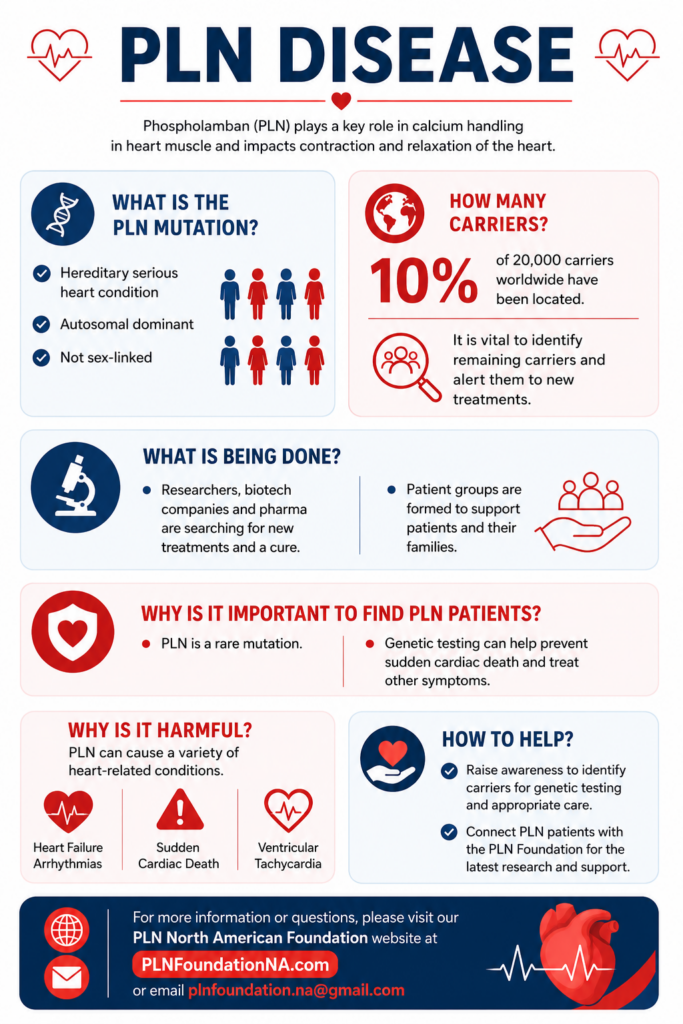
Although awareness of PLN R14del continues to grow, many carriers around the world remain undiagnosed. In North America, only a relatively small number of individuals have been genetically identified, recently reaching around 200 people; researchers believe this represents just a fraction of the true number of carriers. Many families have been affected for generations without realizing that a hereditary heart condition is the underlying cause.
In the Netherlands, where the mutation was first identified, approximately 1,700 carriers have been genetically diagnosed, but researchers estimate that more than 12,000 people may actually carry the PLN R14del mutation. Similar underdiagnosis likely exists in many other countries, including the United States, Canada, and beyond.
Because PLN can remain silent for years, and some carriers never develop symptoms, many individuals are unaware they carry the mutation until a family member is diagnosed with cardiomyopathy, experiences a serious arrhythmia, or suffers sudden cardiac arrest. Others may receive diagnoses such as dilated cardiomyopathy, hypertrophic cardiomyopathy, or arrhythmogenic cardiomyopathy without ever undergoing genetic testing to identify the underlying cause.
Increasing awareness among patients, families, cardiologists, genetic counselors, and primary care providers is critical. Earlier recognition of PLN allows at-risk relatives to undergo genetic testing and cardiac screening, leading to earlier monitoring, personalized treatment, participation in research, and ultimately saving lives. The more families we identify today, the more lives we can protect tomorrow. Awareness is one of the most powerful tools we have until a cure is found.
Researchers believe the PLN R14del mutation originated approximately 700 years ago in a single Frisian ancestor from the northern region of the Netherlands. Through generations of inheritance, this mutation was passed down within families and gradually spread throughout the Dutch population. Genetic studies have shown that the vast majority of individuals with the PLN R14del mutation share this common ancestral origin, making PLN an example of a founder mutation; a genetic change that can be traced back to a single individual or small group of ancestors.
Although PLN was first identified in families of Frisian and Dutch ancestry, it is not limited to the Netherlands. Over the centuries, migration and emigration have carried the mutation around the world. Today, PLN carriers have been identified across across the world. Because many families emigrated generations ago, individuals may be unaware of their Dutch heritage or have no idea that PLN exists within their family.
As awareness grows and genetic testing becomes more widely available, more families around the world continue to discover they carry the PLN R14del mutation. This highlights the importance of recognizing family history, expanding access to genetic testing, and increasing awareness among healthcare professionals so that affected individuals can be identified earlier and receive appropriate cardiac surveillance and care.
In 2006, researchers in the Netherlands identified a mutation in the phospholamban (PLN) gene that was responsible for a unique form of inherited cardiomyopathy. This landmark discovery established the connection between the PLN R14del mutation and an increased risk of heart failure, dangerous ventricular arrhythmias, and sudden cardiac arrest, transforming the understanding of a disease that had affected Dutch families for generations without a known cause.
The discovery was made after physicians and scientists recognized a pattern of inherited heart disease occurring within multiple families. Through genetic analysis, they identified the same mutation shared among affected individuals, ultimately tracing its origin to a common Frisian ancestor who lived approximately 700 years ago. This breakthrough confirmed that PLN-related cardiomyopathy was an inherited condition and paved the way for family screening, genetic counseling, and earlier diagnosis.
Since its discovery, research into PLN has expanded significantly. Scientists around the world continue to study why some carriers remain symptom-free while others develop severe disease, how fibrosis (scar tissue) develops within the heart, and how targeted therapies, including gene therapy, RNA-based treatments, and other precision medicine approaches, may one day slow, prevent, or even cure PLN-related cardiomyopathy.
The PLN R14del mutation is inherited in an autosomal dominant pattern, meaning that a person only needs to inherit one altered copy of the PLN gene to carry the mutation. If one parent is a carrier, each child has a 50% chance of inheriting the mutation and a 50% chance of not inheriting it. This chance is the same for every pregnancy and applies equally to sons and daughters. Each pregnancy is an independent event, so the outcome of one child does not affect the next.
It is important to understand that inheriting the mutation does not necessarily mean someone will develop symptoms. PLN demonstrates variable expressivity and age-dependent, incomplete penetrance, meaning symptoms can vary widely even among members of the same family. Some carriers remain symptom-free throughout their lives, while others may develop arrhythmias, cardiomyopathy, heart failure, or require advanced therapies such as an implantable cardioverter-defibrillator (ICD), ventricular assist device (LVAD), or heart transplant. Researchers continue to study why the disease affects individuals so differently.
Because PLN is hereditary, cascade genetic testing, testing close biological relatives after one family member is diagnosed, is strongly recommended. Identifying carriers before symptoms develop allows individuals to establish care with a cardiologist experienced in inherited cardiomyopathies, undergo routine cardiac screening, and receive appropriate monitoring and treatment if needed. Early diagnosis not only protects the individual but can also help identify other at-risk family members across multiple generations.
For individuals considering having children, meeting with a genetic counselor can help explain inheritance, discuss family screening, and review reproductive options such as prenatal genetic testing or in vitro fertilization (IVF) with preimplantation genetic testing (PGT-M), which can identify embryos that do not carry the PLN mutation. Understanding your options allows families to make informed decisions that align with their personal values and goals.
Over the past two decades, research has transformed our understanding of PLN R14del cardiomyopathy. Scientists now know that PLN is more than a typical form of inherited heart disease, it has unique features that place some carriers at increased risk for life-threatening ventricular arrhythmias, heart failure, and sudden cardiac arrest, sometimes even before the heart’s pumping function becomes severely impaired.
These discoveries have also provided hope. Because researchers now better understand how PLN affects the heart at the cellular level, multiple groups around the world are actively developing targeted therapies, including RNA-based treatments, gene therapy, and other precision medicine approaches.
Several landmark studies have highlighted the importance of early diagnosis and lifelong cardiac surveillance. 3 are highlighted below:
- A study of a group of 51 patients with a heart muscle disease and the PLN mutation showed that 47% of these patients experienced a rhythm disorder that led to a shock from an implantable defibrillator (ICD) to restore normal heart rhythm. In this group of patients, 18% underwent a heart transplant, and 36% had a closely related family member who died suddenly from cardiac arrest before reaching the age of 50.
- During a study of a group of 403 people with the PLN mutation, it was found that the risk of death is much higher compared to the general population, especially in the age group of 20 to 25 years.
- In a subgroup of 295 people who underwent testing with a cardiologist, 19% experienced life-threatening rhythm disorders during a period of 42 months, and 11% experienced severe heart failure.
Every new discovery brings us one step closer to safer treatments, and ultimately, a cure. By participating in research, sharing family histories, and increasing awareness, the PLN community continues to play a vital role in advancing scientific progress for future generations.
The key takeaways from the research occurring is:
1. Arrhythmias Can Occur Early
Research has shown that many individuals with symptomatic PLN develop serious ventricular arrhythmias, often requiring treatment with an implantable cardioverter-defibrillator (ICD). In some studies, nearly half of symptomatic patients experienced ventricular arrhythmias severe enough to require ICD therapy. These findings emphasize why regular cardiac monitoring is essential, even when symptoms appear mild.
2. Heart Failure Can Progress Rapidly
PLN-related cardiomyopathy may progress to advanced heart failure in some individuals, with a subset of patients eventually requiring left ventricular assist devices (LVADs) or heart transplantation. Early recognition and treatment may help slow disease progression and improve quality of life.
3. Not All Carriers Are Affected the Same Way
One of the most challenging aspects of PLN is its unpredictability. While some carriers remain symptom-free throughout their lives, others develop severe arrhythmias or heart failure at a young age. Researchers continue to study why disease severity varies so dramatically, even among members of the same family who carry the exact same mutation.
4. Sudden Cardiac Arrest May Be the First Sign
Unlike many other forms of cardiomyopathy, PLN can cause dangerous ventricular arrhythmias before the heart becomes significantly enlarged or weakened. This means that some individuals with relatively preserved heart function may still be at risk for sudden cardiac arrest, highlighting the importance of regular screening with ECGs, cardiac MRI, Holter monitoring, and follow-up with a cardiologist experienced in inherited cardiomyopathies.
5. Research Is Bringing Us Closer to a Cure
Perhaps the most encouraging finding is that researchers now understand far more about how PLN damages heart muscle cells than they did just a few years ago. International collaborations between scientists, physicians, biotechnology companies, and patient organizations are accelerating the development of gene therapies, RNA-based medicines, and other targeted treatments designed to address the underlying cause of the disease rather than simply managing its symptoms.
(1)This gene mutation has also been found in people in Germany, Greece, Spain, the United States, and Canada. In these countries, it concerns several dozen patients, many of whom have Dutch ancestors.
(2) Van der Zwaag PA, van Rijsingen IA, Asimaki A, et al. Phospholamban R14del mutation in patients diagnosed with dilated cardiomyopathy or arrhythmogenic right ventricular cardiomyopathy: evidence supporting the concept of arrhythmogenic cardiomyopathy. Eur J Heart Fail. 2012;14:1199–207.
(3) Van Rijsingen IA, van der Zwaag PA, Groeneweg JA, Nannenberg EA, Jongbloed JD, Zwinderman AH, Pinto YM, Dit Deprez RH, Post JG, Tan HL, de Boer RA, Hauer RN, Christiaans I, van den Berg MP, van Tintelen JP, Wilde AA. Outcome in phospholamban R14del carriers: results of a large multicentre cohort study. Circ Cardiovasc Genet. 2014 Aug;7(4):455-65. doi: 10.1161/CIRCGENETICS.113.000374. Epub 2014 Jun 8.
Contributors to this factsheet: Pieter Doevendans – UMC Utrecht | Stefan Koudstaal – UMC Utrecht | Folkert Asselbergs – UMC Utrecht | Hamid El Azzouzi – UMC Utrecht | Peter van Tintelen – UMC Utrecht | Arthur Wilde – Amsterdam UMC.
The Gene and Symptoms
When the PLN R14del mutation alters the phospholamban protein, the heart’s ability to regulate calcium becomes disrupted, placing chronic stress on heart muscle cells. Over time, this can lead to cell damage, replacement of healthy muscle with fibrosis (scar tissue), weakening of the heart muscle, and electrical instability. As the disease progresses, carriers may develop arrhythmias (abnormal heart rhythms), cardiomyopathy, fatigue, shortness of breath, exercise intolerance, swelling (edema), heart failure, and an increased risk of sudden cardiac arrest. However, one of the defining characteristics of PLN is its variable penetrance and expression. Not everyone who carries the mutation will develop symptoms, and those who do can experience very different disease severity, even among members of the same family. Some individuals remain symptom-free well into adulthood, while others develop serious heart rhythm disorders or heart failure at a young age. Because PLN can progress silently before symptoms appear, all carriers should undergo regular cardiac screening and follow-up with a cardiologist experienced in inherited cardiomyopathies, even if they feel completely healthy.
Why Early Diagnosis Matters
One of the greatest challenges of PLN is that heart disease can develop silently, often before symptoms are noticeable. Many carriers feel completely healthy while subtle changes are already occurring within the heart. This is why routine cardiac screening is recommended even for individuals without symptoms.
Early diagnosis through genetic testing allows cardiologists to monitor for changes over time, recommend lifestyle modifications when appropriate, initiate treatment if needed, and reduce the risk of serious complications. It also gives families the opportunity to identify other relatives who may carry the mutation and benefit from preventive cardiac care before symptoms develop.
Knowledge can feel overwhelming at first, but it is also empowering. Knowing your genetic status allows you and your healthcare team to make informed decisions, monitor your heart proactively, and take advantage of the latest advances in inherited cardiomyopathy care. We understand that talking with family members about inherited conditions can feel overwhelming. The PLN Foundation is here to help. Whether you need educational resources, conversation guides, or assistance connecting relatives with genetic counselors and testing options, we encourage you to reach out. Together, we can help ensure that every family member has the opportunity to make informed decisions about their heart health.
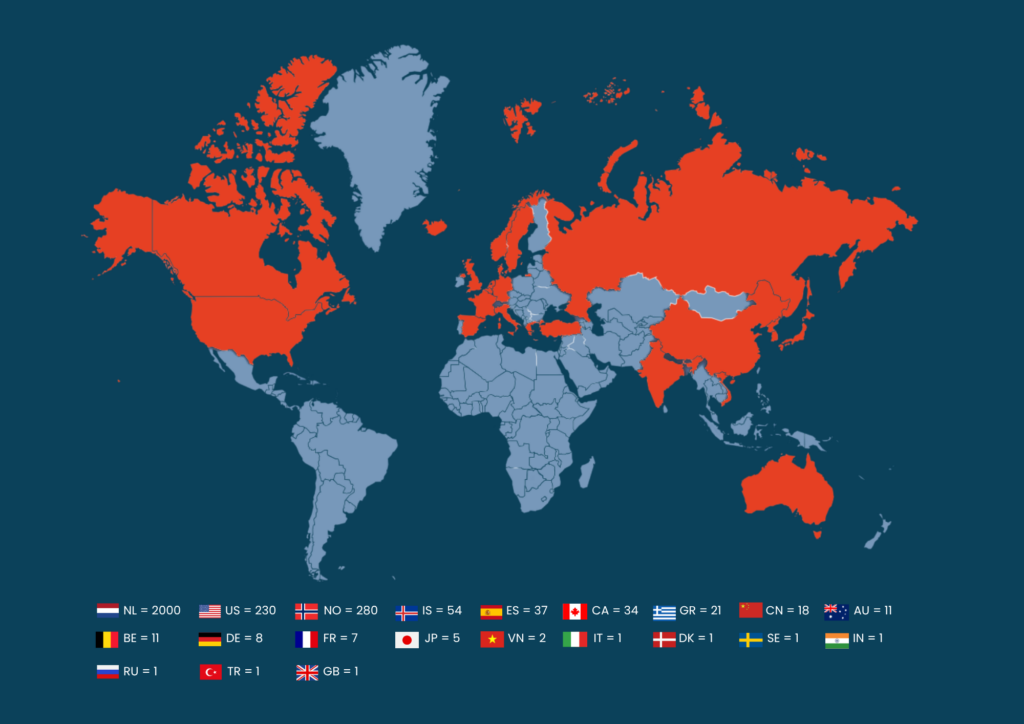
Our Global PLN Community
This map highlights the known locations of individuals carrying a pathogenic PLN gene variant who have connected with the PLN community. While the highest concentration of carriers is found in the Netherlands, particularly due to the well-described founder mutation originating in the Friesland region, PLN-associated cardiomyopathy is a global condition. Carriers have been identified across North America, Europe, Asia, and Australia, demonstrating the importance of worldwide awareness, genetic testing, research, and collaboration. As more individuals are diagnosed and connected through advocacy efforts, this map continues to reflect the growing international PLN community dedicated to advancing education, support, and research.
PLN Resources

Overcome PLN Together
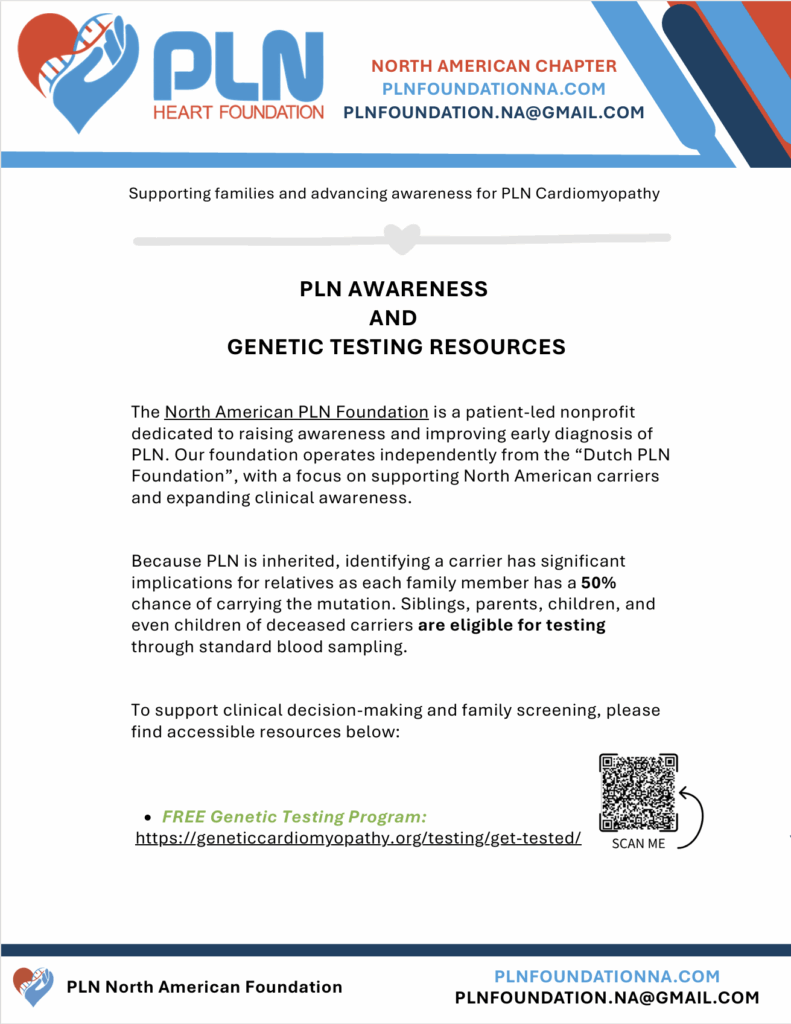
The PLN North American (NA) Foundation is a patient-led organization committed to supporting PLN patients worldwide by building a global research network focused on improving diagnosis, raising awareness, and ultimately finding a cure. The North American foundation operates independently of the “Dutch PLN Foundation”, aiming to reach, inform, and support North-American carriers. We maintain close ties with the Dutch PLN Foundation and actively collaborate with them.
Every person diagnosed with PLN has a story. Some have lost loved ones too soon. Others are living with uncertainty, navigating heart failure, implanted devices, or waiting for the next breakthrough in research. While each journey is different, no one should have to face it alone. We are dedicated to connecting the global PLN community, supporting patients at every stage of their journey, educating healthcare professionals, advancing research, and accelerating the development of life-changing treatments.
Hope grows stronger when we face this together.